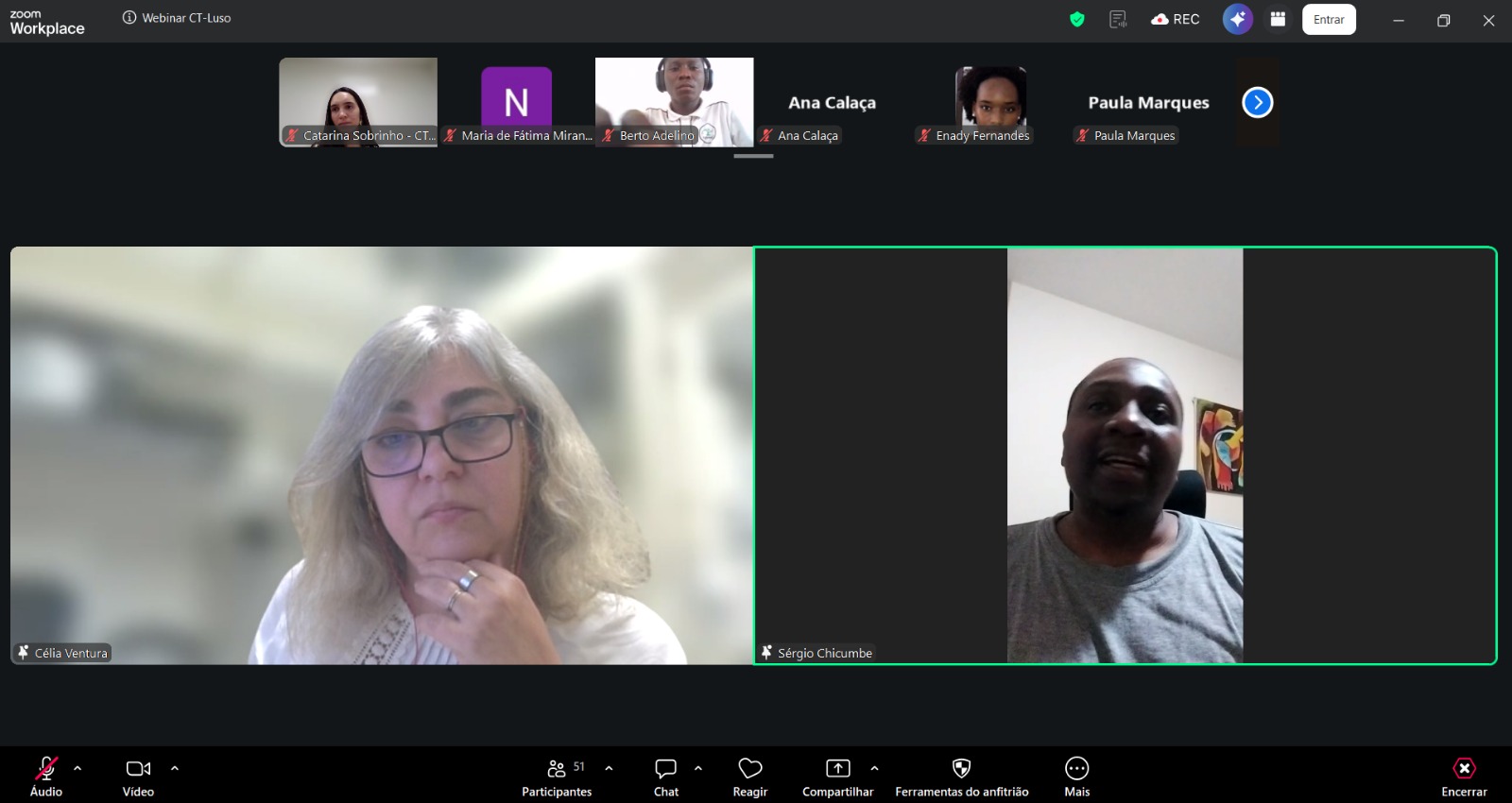
The fourth session of the CT-Luso Webinar Series, dedicated to the theme “Public Health and Epidemiology”, took place online on 26 March, bringing together participants from several Portuguese-speaking countries to discuss the main challenges in this field.
The session was moderated by Célia Ventura, Researcher in the Department of Human Genetics at the National Health Institute Doutor Ricardo Jorge, and featured a presentation by Sérgio Chicumbe, Senior Researcher at the National Institute of Health of Mozambique and National Director for the Training of Health Professionals at the Ministry of Health of Mozambique.
In his presentation, which focused on the Mozambican experience, Sérgio Chicumbe highlighted the role of public health as a collective effort aimed at ensuring the social, environmental and behavioural conditions that enable populations to achieve better health outcomes. He also stressed that health promotion requires a multisectoral approach based on coordination between different fields and institutions.
Epidemiology was presented as a key tool in this process, making it possible to analyse patterns in disease distribution, identify risk factors and support the development of more effective policies and interventions. The speaker highlighted the importance of analytical methods and systematic data collection, which are essential for an informed response to health challenges.
In an increasingly interconnected global context, Sérgio Chicumbe warned of the impact of mobility and globalisation dynamics on the spread of diseases, stressing that local threats can quickly acquire an international dimension.
Against this backdrop, the specialist drew attention to the growing number and frequency of public health events, particularly on the African continent, including outbreaks of infectious diseases, health emergencies and situations requiring increased monitoring of risks and early signs of disease. This scenario results from a combination of factors, including growing population mobility, climate change, rapid urbanisation and weaknesses in health systems, all of which can facilitate the spread of disease. Among these, malaria remains particularly significant, continuing to be one of the leading causes of morbidity and mortality in several African countries, despite the progress made in recent years. In this context, strengthening epidemiological surveillance systems, improving early response capacity and promoting closer cooperation between countries are essential to prevent, detect and contain public health threats more effectively.
The session concluded with a discussion that provided an opportunity to explore some of the issues raised and reinforced the importance of sharing knowledge and experience across the Portuguese-speaking world, fostering mutual learning and strengthening health systems.