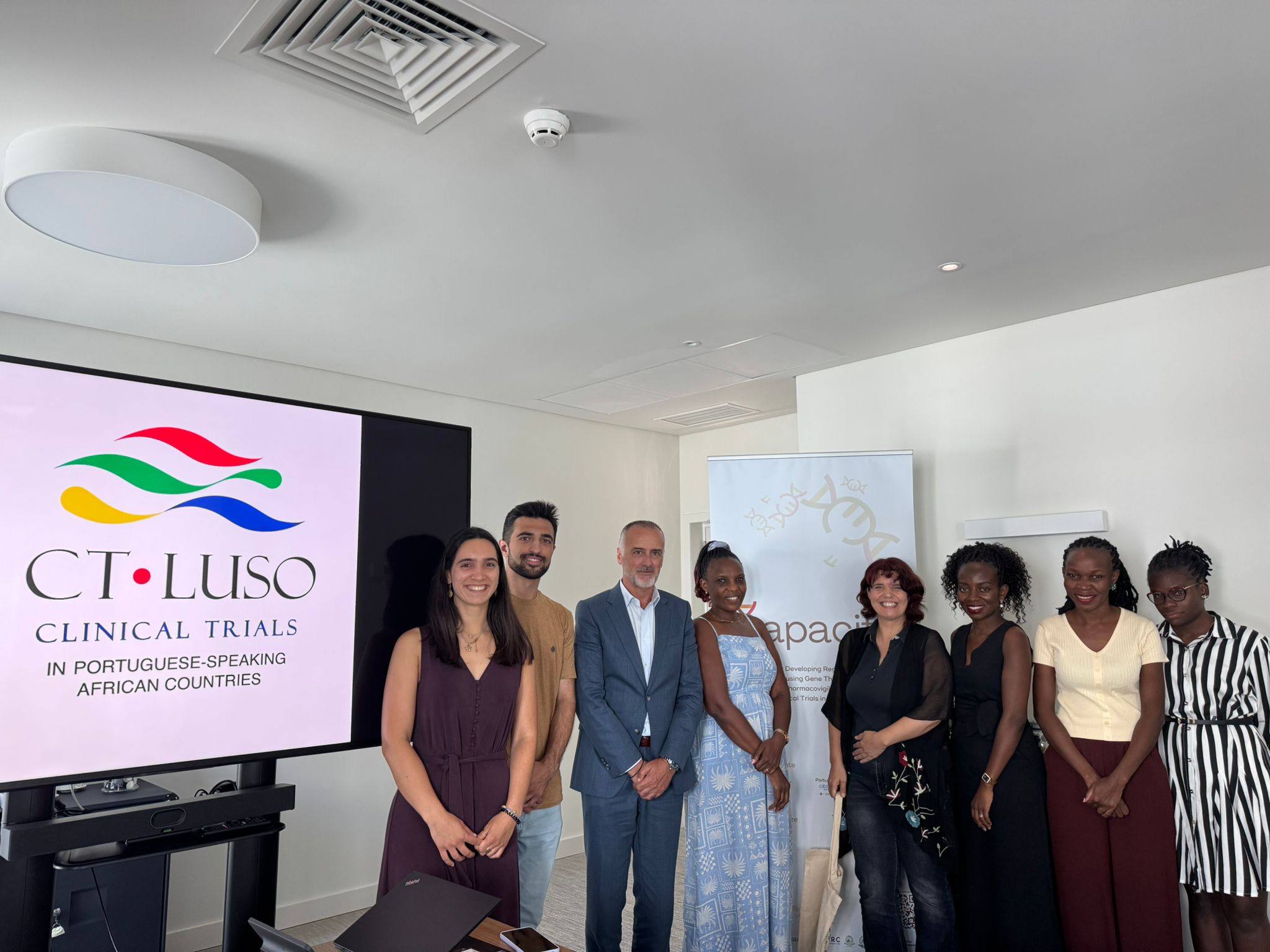
On July 4th, the President of the Portuguese Pharmaceutical Society (Ordem dos Farmacêuticos), Helder Mota Filipe, was invited to present the CT-Luso project and its predecessor, BERC Luso, sharing his experience in coordinating capacity-building initiatives in Portuguese-speaking African countries (PALOP).
The invitation was extended within the framework of the CAPACITY 2023 project, aimed at promoting in-person training internships for five professionals from CT Luso’s partner institutions. The goal is to provide participants with a deeper understanding of existing regulatory frameworks for clinical trials and pharmacovigilance, both at national and European levels.
CAPACITY 2023, part of a wider ecosystem of gene therapy-related projects—such as GeneT, Gene H, and other initiatives coordinated by CNC-UC within the Centre for Innovation in Biomedicine and Biotechnology (CIBB)—brings together institutional partners from Tanzania and Uganda. Its main objective is to develop regulatory capacity for clinical trials involving gene therapy products and to strengthen pharmacovigilance in the implementation of these trials in East Africa.
The regulatory framework for advanced therapies in Africa is still at an early stage, and access to such treatments remains limited, despite their potential to cure diseases with high morbidity and mortality rates in the region, such as sickle cell anemia and HIV.
Present at the session on behalf of the Portuguese Pharmaceutical Society/CT-Luso were President Helder Mota Filipe and CT Luso project manager Catarina Sobrinho. Representing CAPACITY were members of the National Drug Authority of Uganda—Dr. Helen Byomire Ndagije, Sheila Ampaire, Sharon Kiggundu, and Florence Wanyenze—and the Muhimbili University of Health and Allied Sciences (Tanzania), represented by Dr. Florence Urio. From the Portuguese side, Helena Henriques Antunes and Francisco Lopes (CNC-UC and Gene-T) also attended.
The meeting reinforced the importance of international cooperation in the development of robust regulatory frameworks and in ensuring greater safety and quality in conducting clinical trials with innovative therapies in Africa.