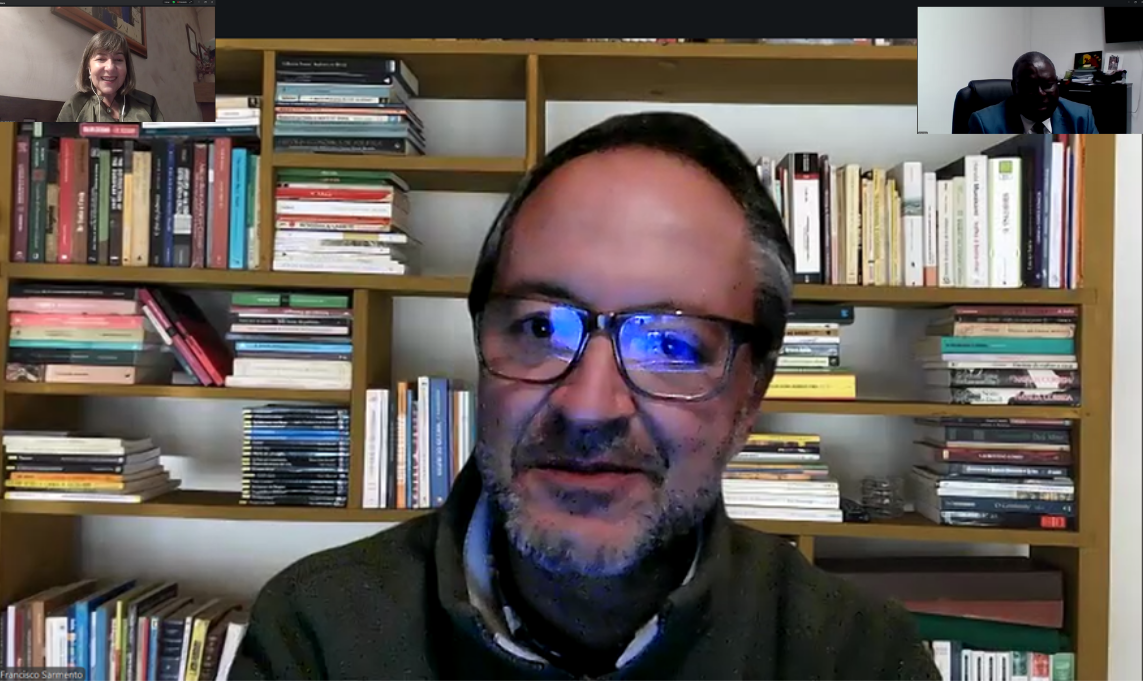
The CT-Luso Project has launched its new webinar series with a session dedicated to the theme “The Importance of Food Sovereignty for Sustainable Development”, held online on 19 November.
The session was attended by the Ambassador of Guinea-Bissau to Portugal, Artur Silva, who highlighted the relevance of this topic to population health and to the countries of the Community of Portuguese-Speaking Countries (CPLP). The CT-Luso Project Coordinator and webinar moderator, Maria do Céu Patrão Neves, recalled that it was the Ambassador who, at the [International Lusophone Symposium] held at the Portuguese Pharmaceutical Society last September, proposed dedicating a webinar to this topic.
The guest speaker, Francisco Sarmento, Representative of the Food and Agriculture Organization of the United Nations (FAO) in Portugal, highlighted the central role of food in public health and in maintaining the balance of agricultural systems.
In his presentation, he provided a historical and critical analysis of the global food system, explaining how technological developments, the liberalisation of agricultural trade and socioeconomic changes have profoundly transformed the way the world produces and consumes food.
“The increase in global production has brought more food, but not always greater nutritional value,” he said, adding that the spread of ultra-processed foods and the loss of dietary diversity have contributed to diseases such as type 2 diabetes, hypertension, anaemia and various types of cancer, among others.
Francisco Sarmento stressed that food is not merely a matter of agricultural production, but also of culture, identity and sustainability. “Working on the food we eat is working on our culture,” he said.
The FAO representative in Portugal also addressed the impact of climate change, which “knows no borders” and affects agricultural systems unevenly. He stressed the need to strengthen collective strategies to mitigate climate risks and increase the resilience of rural communities.
{mlang}