The second session of the CT-Luso webinar series took place online on 29 January and focused on “Clinical and Non-Clinical Research: Scientific Methodologies and Professional Integrity. Good Clinical Practice. The Role of Ethics Committees”, with a particular focus on the scientific and ethical principles guiding health research.
Moderated by Esperança Sevene, Scientific Lead of the CT-Luso Project, the session featured Susana Magalhães, Assistant Professor at Fernando Pessoa University and Coordinator of the Responsible Conduct of Research Unit at the Institute for Research and Innovation in Health (i3S) of the University of Porto. She highlighted the role of good clinical practice, professional integrity and ethics committees in promoting rigorous, transparent and responsible research.
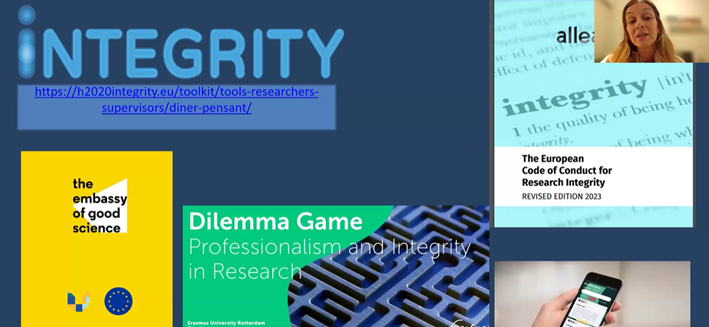
Under the theme “The Place of Ethics in the Scientific Community: Dialogues That Make a Difference”, Susana Magalhães argued that scientific integrity is essential to ensuring the credibility of research and the relationship between science and society. Drawing on a reflection by scholar Sheila Jasanoff, she noted that much of our everyday lives depends on trust in strangers.
Trust, she stressed, is not built in isolation. Promoting ethics and integrity is not the sole responsibility of the researcher in the laboratory, but involves research teams, institutions, funders, scientific journals and publishers. Organisations play a decisive role in creating a culture of responsible research.
Integrity breaches may be associated with fragile institutional environments marked by insufficient funding, job insecurity and evaluation models excessively focused on productivity. While honest mistakes are part of the scientific process, acts that represent significant deviations from accepted practices, whether intentional, conscious or reckless, are not acceptable.
During the discussion, following a question from CT-Luso Project Coordinator Maria do Céu Patrão Neves, Susana Magalhães contextualised the increase in reports of research misconduct within a period of profound transformation in scientific research. The growth in the number of researchers, increased funding, pressure to publish and the ever-growing volume of scientific articles, compounded by the challenges posed by artificial intelligence, have contributed to a more complex environment, in which there are also more mechanisms for detecting and reporting misconduct. The increase in identified cases of research integrity breaches is therefore the result of this combination of circumstances, rather than simply a deterioration in individual behaviour.
Against this backdrop, the speaker argued that tackling research misconduct requires more than codes and regulations. Continuous training and the creation of spaces for reflection are essential, but they must be accompanied by change occurring both from the top down and from the bottom up. All actors within the system have responsibilities, but without structural changes to research funding models, researcher evaluation criteria and institutional culture, the capacity for individual action remains limited.