News
Communication
News
CT-Luso Article Published in Medicine and Law
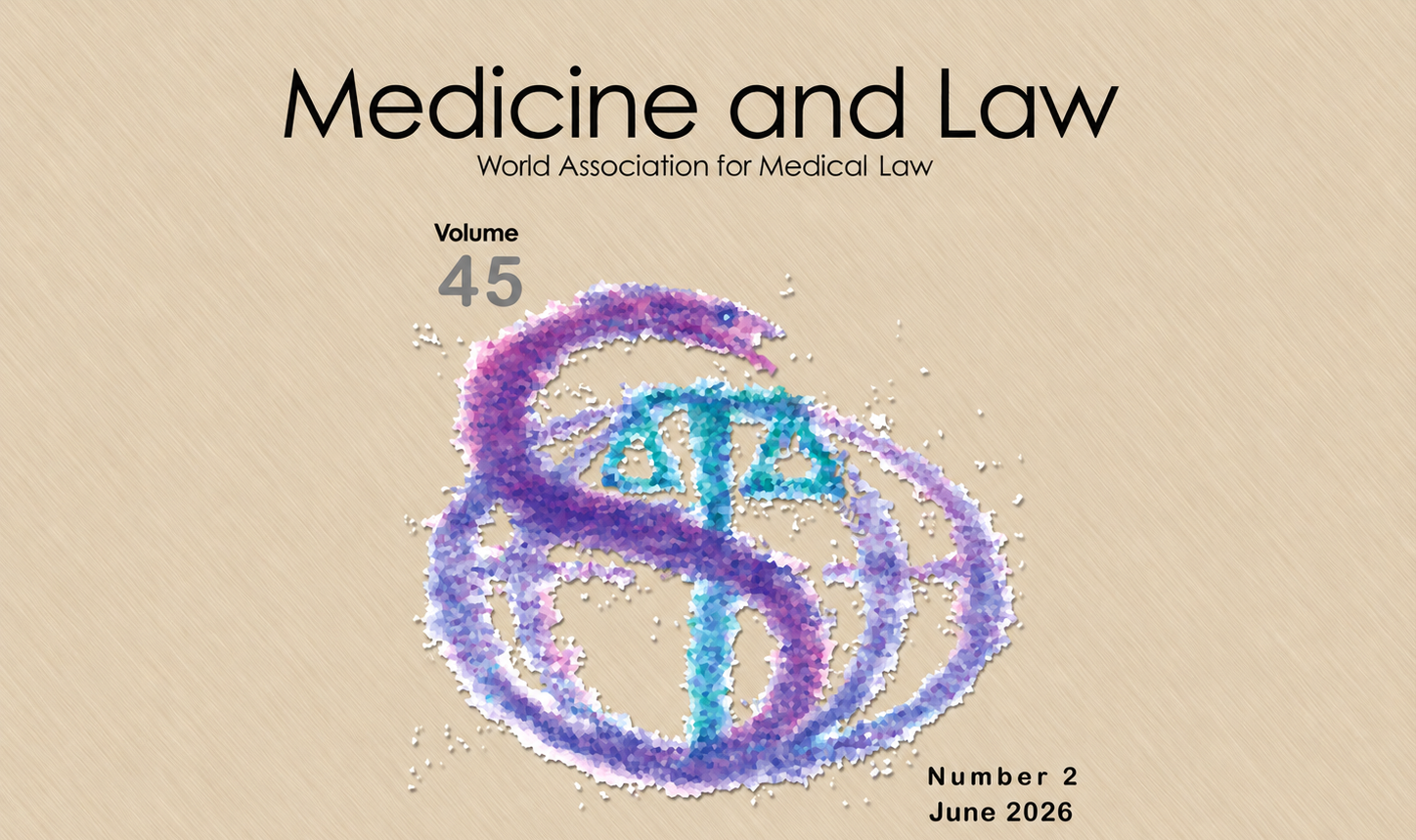
An article developed under the CT-Luso Project has been published in Medicine and Law, the international journal of the World Association for Medical Law. Entitled ‘Strengthening Ethical and Regulatory Frameworks for Clinical Trials in Lusophone Africa: Insights from the CT-Luso Project’, the article is included in Volume 45, No. 2, June 2026, pp. 353–378. The authors are Carla Barbosa, Daniela Marques Dias, André Dias Pereira, Walter Van-Trier, João Semedo, Miguel Pereira, Virgílio Uamba, Neidyne Afonso and Maria do Céu Patrão Neves.
The publication presents the legislative and regulatory frameworks governing biomedical and clinical research in Angola, Cabo Verde, Guinea-Bissau, Mozambique and São Tomé and Príncipe, providing a comparative analysis in light of international standards and best practices. The study identifies significant regulatory heterogeneity, different levels of development and regulatory and ethical gaps, and puts forward recommendations aimed at promoting alignment with global guidelines and regional harmonisation across the PALOP.
The article stresses that aligning national legislation with international good research and clinical practice standards (GCP) and harmonising the frameworks of the five countries are essential foundations for strengthening clinical research systems. This process should not be understood as imposed uniformity, but rather as a ‘gradual and dialogical process of alignment’, built on strengthening national capacities, adapting international standards to local contexts and promoting regional cooperation.
Based on the analysis conducted, the authors present a Strategic Action Plan that includes, among other measures, the adoption or consolidation of comprehensive and specific legislation on clinical and biomedical research; the formalisation and clarification of the mandates of regulatory authorities and ethics committees; the creation of national and interoperable clinical trial registries; and the strengthening of ethical safeguards concerning informed consent, the protection of vulnerable populations, conflict-of-interest management and access to post-trial care.
The Plan also provides for the institutionalisation of capacity building and professional training for regulators, members of ethics committees and researchers and, as a final stage, progress towards regulatory harmonisation across Lusophone Africa through structured cooperation mechanisms, including common ethical guidelines, mutual recognition procedures, joint inspection systems and collaborative assessment processes.
Implementing this pathway should enable the Portuguese-speaking African countries to move from fragmented regulatory reforms towards a ‘coordinated and capacity-building model of clinical research governance’, strengthening participant protection, scientific quality, regional integration and the contribution of research to national health systems and health innovation. The broader objective is to lay the foundations for a ‘Lusophone African clinical trials hub’ that is scientifically competitive and grounded in ethical principles.