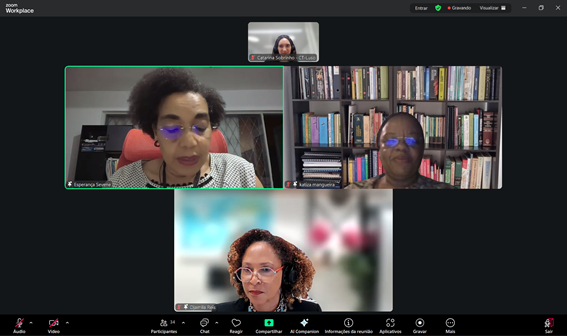
The third session of the CT-Luso Webinar Series, dedicated to the theme “Regulatory Affairs in Africa”, took place online on 26 February at 6:00 p.m. (Portugal time), with around 70 participants.
Esperança Sevene, Scientific Coordinator of the CT-Luso Project, opened the session, which was moderated by Katiza Mangueira, Pharmaceutical Regulatory Officer in Angola. The online meeting featured a presentation by Cape Verdean Djamila Reis, from the World Health Organization (WHO) Department of Regulation and Prequalification. The speaker, who noted that the information presented was shared in her personal capacity, highlighted both the challenges and opportunities surrounding regulatory affairs in Africa.
In the Portuguese-speaking African countries (PALOP), regulatory harmonisation faces challenges including limited human resources, a high dependence on imported medicines, and legislative frameworks at different stages of development. At the same time, strategic opportunities include shared languages and cultural and legal roots (the Portuguese-speaking legal tradition), as well as the use of regulatory reliance based on assessments carried out by the EMA (European Medicines Agency), INFARMED or WHO.
The future points towards greater regulatory convergence, information sharing and the adoption of digital technologies. Artificial intelligence, one of the topics that generated the greatest interest during the discussion with participants, is emerging as a promising tool to support regulatory decision-making, pharmacovigilance and process automation, while also requiring a robust governance and ethical framework.