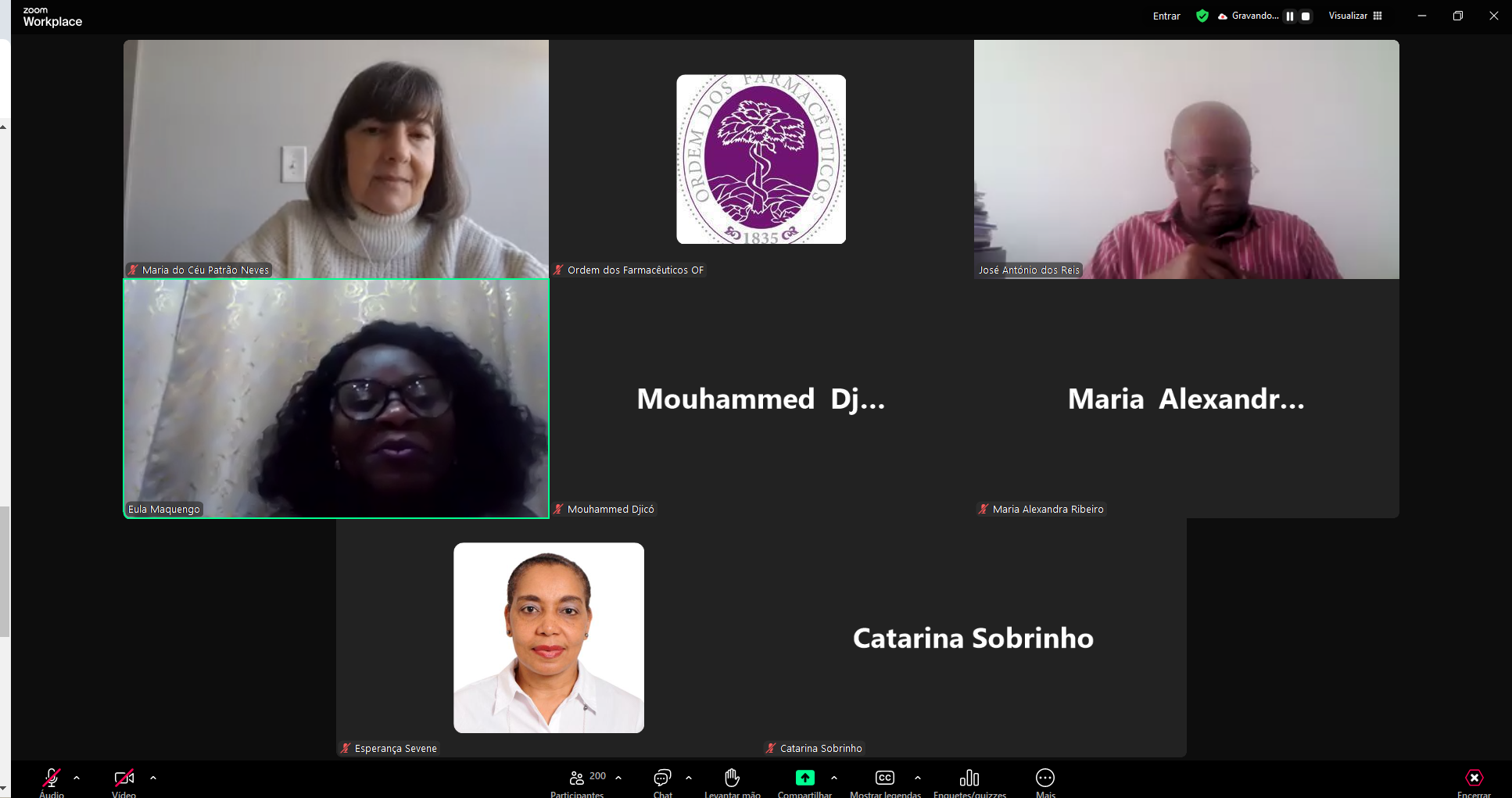
On 7 January, an online workshop was held to deepen the debate on ethical principles in biomedicine in the Portuguese-speaking African countries (PALOP). The main objectives of the event were to revisit and expand on the topics covered during the training sessions and marked the end of the first module entitled ‘Science and Ethics: their relationship’.
The initiative, which was opened and contextualised by CT Luso project coordinator Maria do Céu Patrão Neves, brought together 262 participants, including guests and trainees.
The panel included internationally renowned experts:
- José António Reis (Cape Verde), president of the National Ethics Committee for Health Research.
- Mouhammed Djicó (Guinea-Bissau), permanent secretary of the Multisectoral Coordination Commission for the Fight against HIV/AIDS, Tuberculosis and Malaria.
- Esperança Sevene (Mozambique), president of the National Committee for Bioethics in Health.
- Eula Maquengo (São Tomé and Príncipe), chair of the Health Ethics Committee for Scientific Research
The debate began by analysing the ethical principles that structure biomedicine. Concepts such as beneficence, justice and solidarity were mentioned, articulated in the historical context and from the perspective of human rights. The dialogue highlighted issues such as the operationalisation of ethical principles in the context of clinical trials, clinical care and health policies in African countries, highlighting the relevance of access to resources and social justice. The debate moved on to the working conditions of the Ethics Committees dedicated to Clinical Research and the development and evolution expectations for the coming months in each of the partner countries.
The workshop paved the way for the next steps in training, consolidating the importance of ethics in health and biomedical research in the PALOP countries.